Having a CRM system developed: costs, benefits, break-even
What a custom CRM really costs: real price ranges, the hidden cost drivers and an honest calculation against an off-the-shelf CRM for mid-sized companies.
“What does it cost to have a CRM system developed?” is one of the most frequent questions in our initial calls – and one of the most poorly phrased. It is about as precise as asking the price of a vehicle. Nevertheless, you deserve a reliable answer before you ask for an offer. This article therefore gives real orders of magnitude, explains the cost drivers and says clearly when your own CRM pays off – and when you are better off sticking with an off-the-shelf product.
Why prices without context are worthless
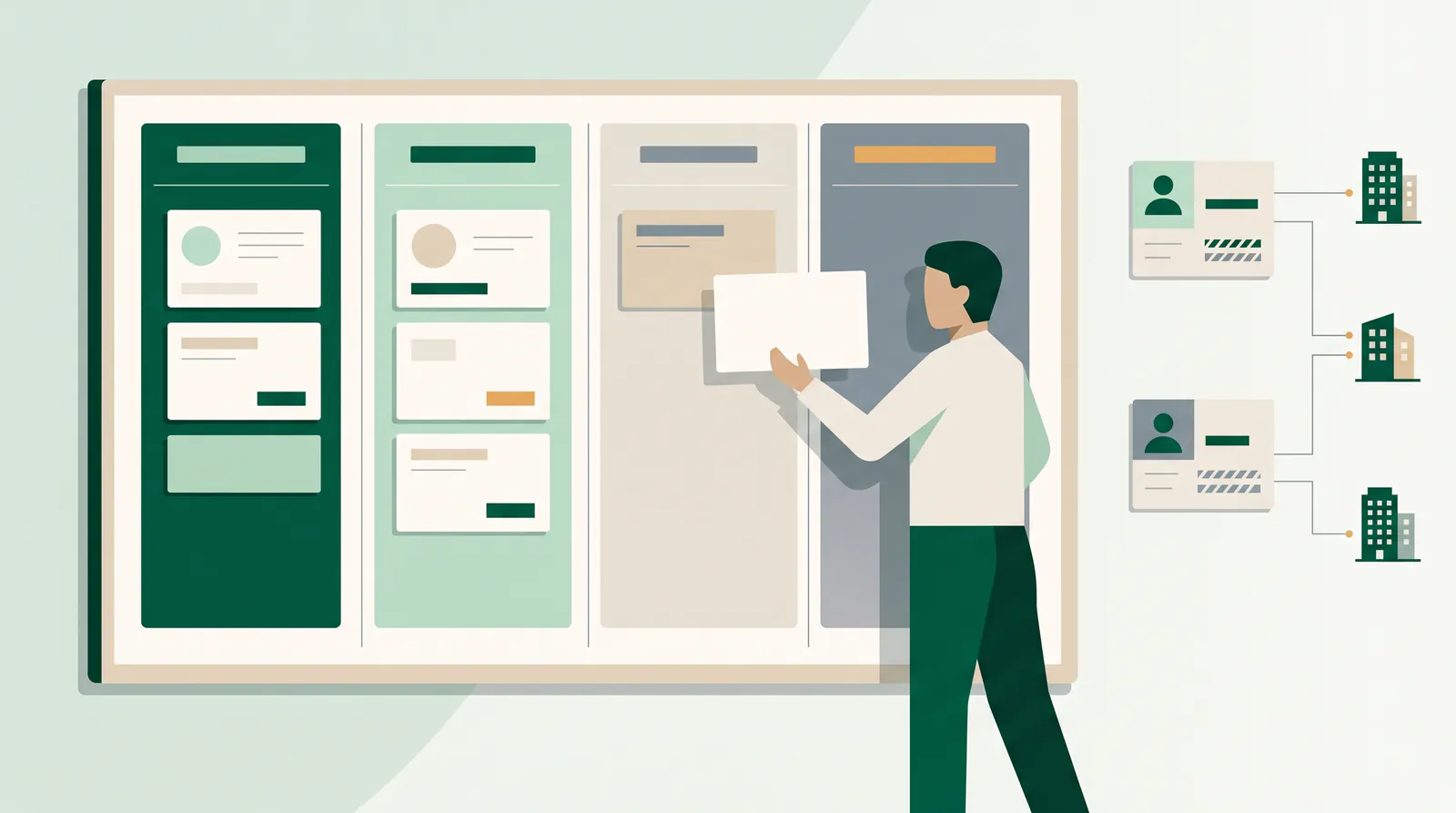
Two companies make the same inquiry. One means an organized contact list with tasks and email integration for five salespeople. The other means a system that calculates offers, manages projects, generates invoices, calculates commissions and is connected to three third-party systems. Both say “CRM”. Between the two lies a factor of five to ten.
Our position on this is uncomfortable: anyone who names a figure in the initial call without asking a single question is either selling you an off-the-shelf product under a false name or is already planning the change request. A serious price only emerges once it has been clarified which processes will actually be mapped.
What the price is really made up of
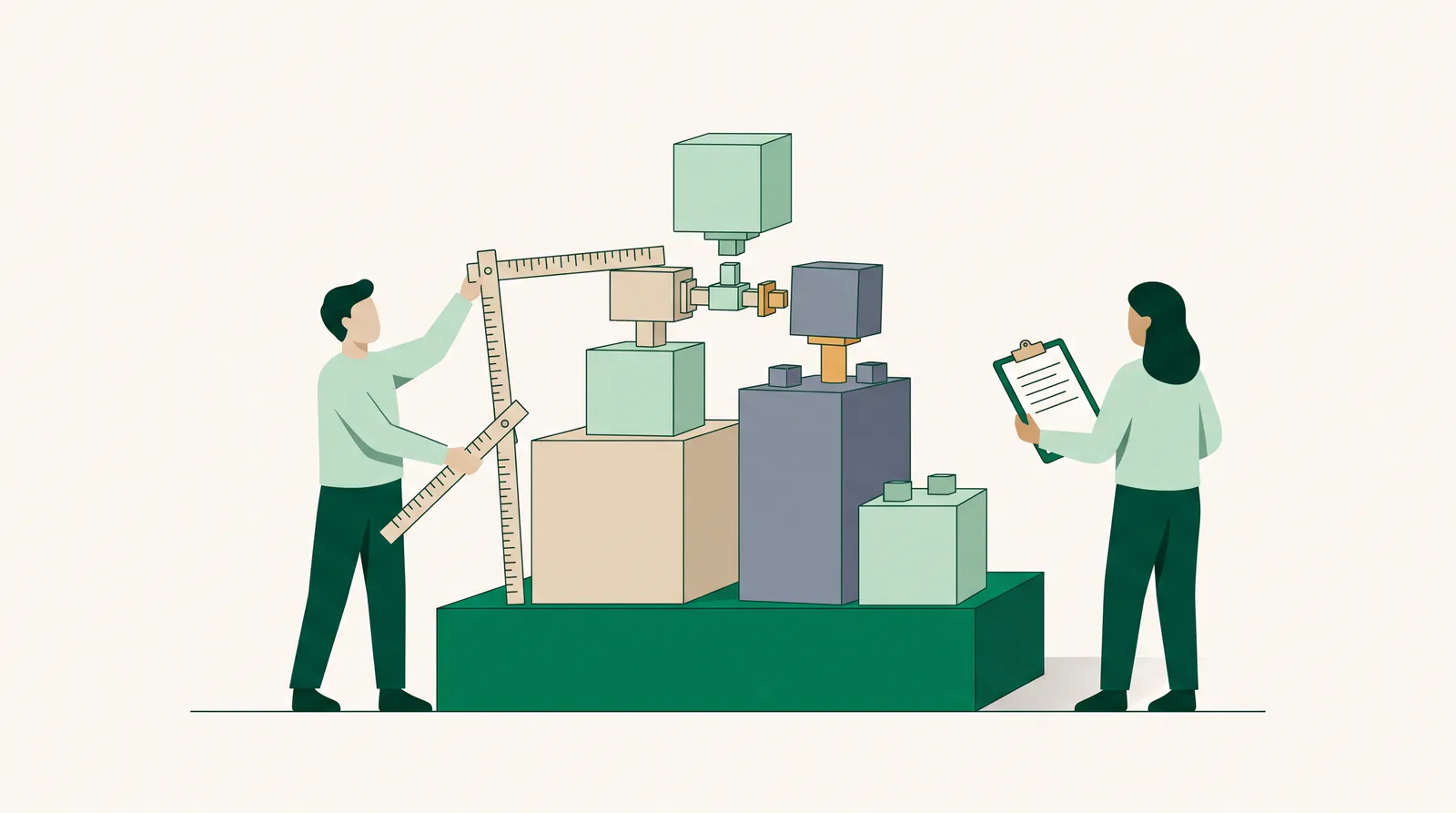
- Data model. How many objects are there (contacts, companies, offers, projects, contracts) and how are they related? This is the foundation and determines almost everything else.
- Roles and permissions. “Everyone sees everything” is cheap. Several teams with graded visibility and approval logic are not.
- Integrations. Email and calendar, telephony, accounting, website forms, advertising platforms. Each integration is a small project of its own with its own error handling.
- Data migration. The most underestimated item. It is not the transfer that costs money, but cleaning up duplicates, legacy data and free-text fields.
- Automations. Reminders, status changes, handovers between departments, document generation.
- Reports. A few key figures are quickly built. Reliable reporting across several dimensions is a project in its own right.
- Operation. Hosting, backups, updates, support – permanently, not once.
Realistic orders of magnitude
The following ranges correspond to what we at DigifyNow actually offer. They are deliberately wide, because the scope is decisive:
- Lean sales CRM (contacts, pipeline, tasks, email integration, one role concept): from approx. €8,000 – €15,000
- Back-office CRM (additionally offer and order logic, document generation, several roles, two to three integrations): approx. €18,000 – €40,000
- Platform with customer portal (external access, automations, AI features, reporting): from approx. €40,000
- Ongoing operation: usually €200 – €600 per month, depending on the number of users and integrations
What matters is what these figures do not include: your own time. A CRM project costs your team decisions, testing effort and process discipline. Those who don't plan for this pay for it twice later.
When does this pay off compared with an off-the-shelf CRM?
Do the honest math – and not just the license. An off-the-shelf CRM usually costs you a monthly amount per user, often plus add-on modules for exactly the functions you actually wanted, plus external consulting for the setup, plus sometimes surcharges for API access. With 30 to 50 users, mid-sized companies quickly end up in the low five-figure range per year – permanently.
Against this sum stands a one-off development plus manageable operating costs. In our projects the break-even point is typically between 12 and 24 months. After that the gap grows every year – and you no longer pay for your company growing.
Nevertheless: with fewer than around ten users and processes that are standard for the industry, an off-the-shelf product is almost always the right choice. The detailed decision logic is in our article Custom software vs. SaaS.
How to tell that a CRM project is getting expensive
- Field sprawl. Every department wants three extra fields. After six months nobody fills them in any more.
- The special-case reflex. “And what if a customer has two billing addresses and three contacts, one of whom is only responsible during holidays?” Such cases should be discussed – but not all of them in version one.
- Migrating data garbage. Anyone who takes over 40,000 uncleaned contacts pays for it twice: during the migration and afterwards in every report.
- Reporting before process. Building dashboards before the data is being created cleanly produces pretty charts without meaning.
- No owner on the client side. The most expensive factor of all – decisions that sit for two weeks lengthen every project.
The underestimated cost block: connecting legacy systems
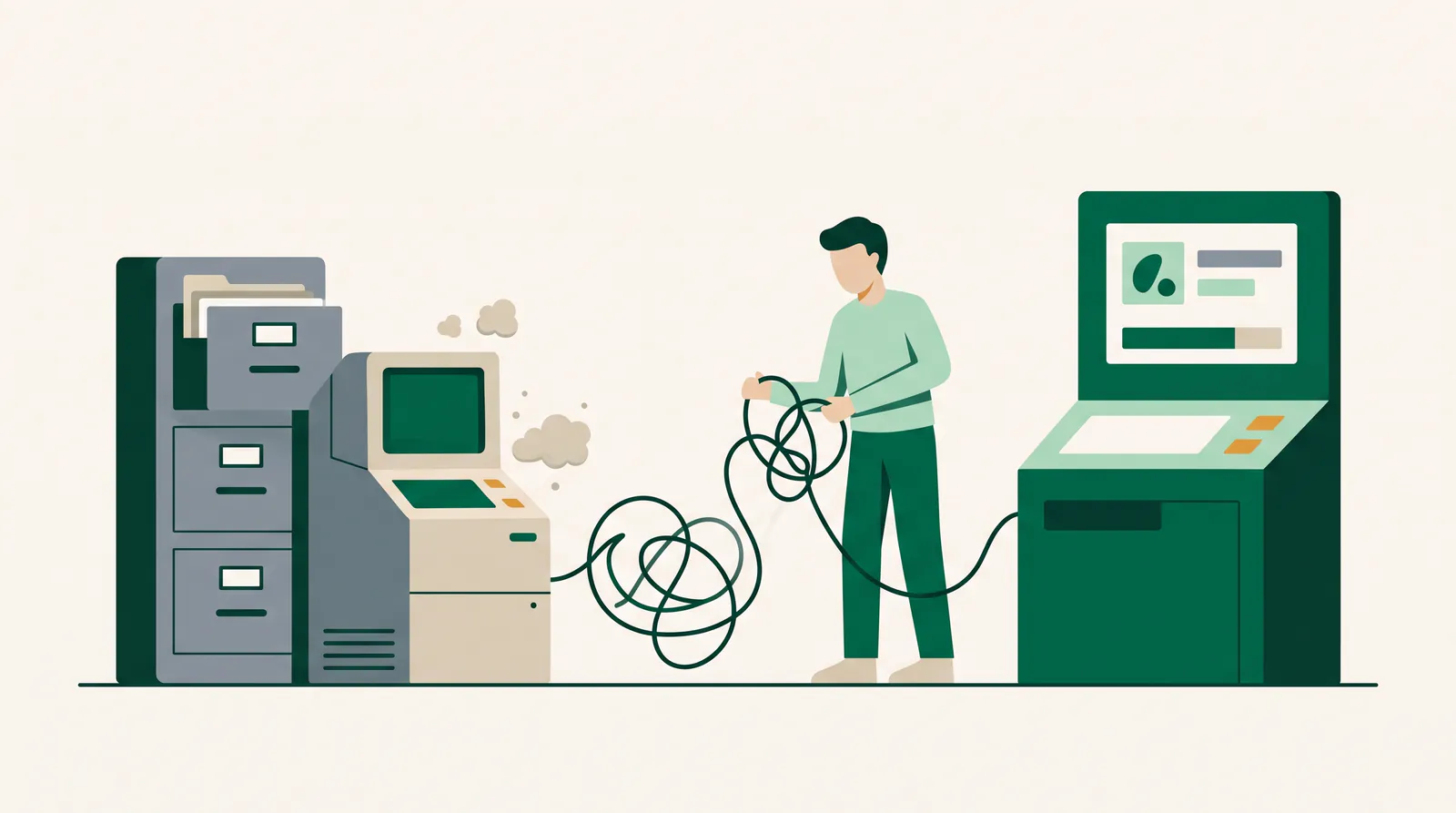
When a CRM offer is well above the expected range, an interface is almost always the reason. Modern systems with a documented interface can be connected in days. A grown ERP system without documentation, accessible only via nightly file exports and with a data model that only one employee still understands, is a sub-project of its own.
So ask early: is there a documented interface? Who in the company knows the data model? How up to date does the data really need to be? The last question saves the most money. Between “synchronized in real time” and “reconciled once a night” there is often a difference of several thousand euros in effort – and, in everyday use, surprisingly rarely a noticeable difference.
What you should clarify before the first offer
The better these points are prepared, the more reliable every offer you receive will be – including from other providers:
- Which processes should be mapped? Write them down in full sentences, not as a feature list.
- Who works with it every day? Number of users, roles, mobile use yes or no.
- Which systems have to be connected? And which of them really in version one.
- Which report do you absolutely need? One to three key figures that support business decisions.
- Who decides? One contact person with a mandate, not a committee with scheduling problems.
- What is the trigger? If you can't name what concretely hurts today, the project isn't ready yet.
How we proceed
We don't build a CRM in one go. The first stage maps the process that costs the most time today – usually the offer or inquiry process. This part goes into production, gets used, and only then do we decide together on the next building block. That is less comfortable than a large requirements specification, but it prevents you from paying for functions that nobody ever touches.
We almost always plan the replacement of an existing system as parallel operation: both systems run side by side for a few weeks, the new one leads, and the old one remains available read-only. That costs a little more migration effort and spares you the situation where a department is left without a working process on a Monday morning. Those who switch over on a fixed date instead save on the offer and pay for it in operation.
Our case study on the back-office and CRM project for Mundo Marketing shows what this looks like in concrete terms. You can find more projects under case studies & apps and the scope of our services under services.
What we consider overrated
Three things that, in our view, people regularly pay too much for. First, the “360-degree customer view”: impressive in the demo, but in everyday use nobody looks at 14 tiles. Second, AI-based lead scoring with small amounts of data – without reliable historical deals, that is number mysticism. Third, fully integrating all systems from day one. Two well-functioning interfaces are worth more than six half-finished ones.
Where AI really does carry weight in a CRM, by contrast, is in preparation – structuring call notes, generating draft offers, suggesting data maintenance. More on this on our page AI assistant.
Conclusion
A custom CRM is not a question of taste but of numbers and process depth. Fewer than ten users and standard processes: hands off. With evolved particularities, a growing number of users and processes that are your competitive advantage: usually the cheaper decision – provided you start small and stay disciplined.
Frequently asked questions
Roughly what does a custom CRM cost?
A lean sales CRM starts at around €8,000 to €15,000; a back-office CRM with offer logic and several roles usually costs between €18,000 and €40,000. On top of that come ongoing operating costs of around €200 to €600 per month. The range depends above all on the number of integrations and the depth of the processes.
How long does the rollout take?
With us, a first stage that can be used in production can usually be reached in four to eight weeks. Complete replacements of existing systems take longer, because migration and parallel operation have to be planned.
Can we take over data from our old system?
As a rule, yes. What matters is less the technical transfer than the data quality. We recommend cleaning up before the migration and only taking over what is actually needed.
Let's talk for 30 minutes
We review your project free of charge and without obligation – an honest assessment, not a sales pitch.
Book a callMore articles
AI agents in mid-sized companies in 2026: what really works
An opinion piece from project work: which AI agents hold up in mid-sized companies in 2026, which are pure marketing and how to get started sensibly.
Having an app developed and publishing it on the App Store
From idea to App Store and Play Store: accounts, the review process, common reasons for rejection and costs – with experience from our own app Festino.