ChatGPT Business: Pricing, GDPR, Plan Choice
· DigifyNow
ChatGPT Business is OpenAI's team plan. You buy it for at least two users and pay per seat. Everyone works in a shared workspace that an admin manages centrally. By default, OpenAI doesn't use company data for training, and a data processing agreement is available. Your cost depends on the number of seats and the billing period. Whether your use fits the GDPR comes down to your own rules: what data people may enter, on what legal basis and with what documentation.
What is ChatGPT Business?
ChatGPT Business is the plan OpenAI uses to offer ChatGPT to teams. Google's AI Overview for a search on ChatGPT Business cites the OpenAI Help Center and describes it as a secure team workspace for at least two users, with central administration, more advanced models and no model training on your data. The real difference from personal accounts is the workspace. The contract is with the company, not with individual employees. An admin invites members, removes them and sets the settings for everyone. When someone leaves the company, their access ends as soon as they're removed from the workspace. Their chats don't stay behind on a personal account the company can't get into.
OpenAI's product page says company knowledge and connected extensions are also part of the workspace. Which integrations are available, and which ones the admin has to approve first, depends on the current plan and on your account. Check that before you buy. One thing to keep in mind: Business is the same ChatGPT your employees may already use at home. It just comes with a contract, admin controls and different data rules. It isn't a ready-made company system that already knows how your business runs.
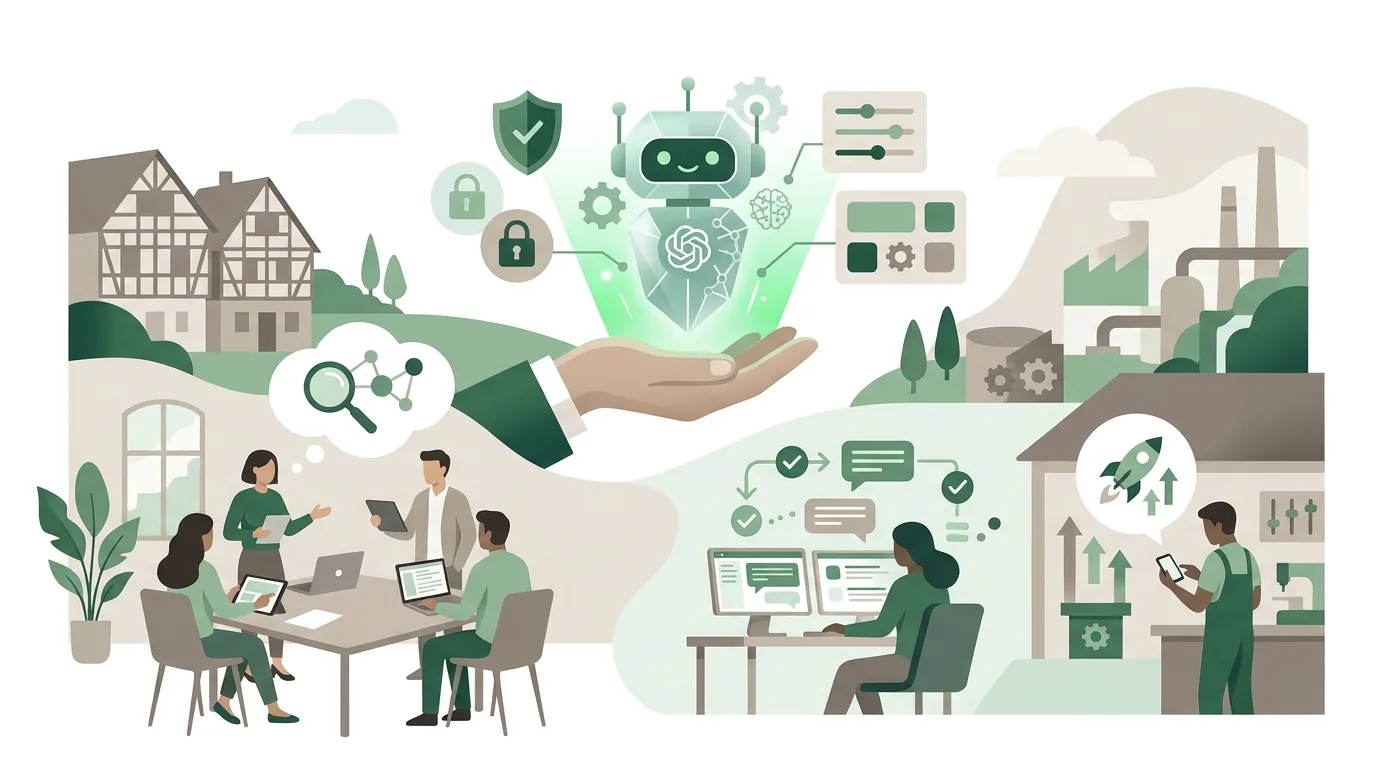
ChatGPT Plus vs Business vs Enterprise vs API: Which one fits?
Three questions decide it. Who signs the contract? Who manages access? And will people be chatting, or will software use ChatGPT in the background? The table puts the same features side by side for each option. It's based on OpenAI's information as quoted in search results. OpenAI changes details like model selection and usage limits regularly, so those aren't included here.
| Feature | ChatGPT Plus | ChatGPT Business | ChatGPT Enterprise | OpenAI API |
|---|---|---|---|---|
| Designed for | One person, personal account | Teams of two or more users in a shared workspace | Larger organizations with their own contract | Software that calls a model in the background |
| Administration | Each user manages their own | Admin manages members and settings centrally | Central, with extended admin features according to OpenAI | Through API keys and projects in the developer account |
| Training on your data | Depends on each user's setting | No by default (according to OpenAI) | No, according to OpenAI's ChatGPT Enterprise announcement | Terms are in OpenAI's developer documentation |
| Data processing agreement | Not set up as a company contract | Available | Available | Check OpenAI's terms for business customers |
| Billing | Subscription per person | Per seat, monthly or annual | Custom contract with OpenAI | Usage-based, per processed token |
For a company, Plus works at most as a trial for one person. Business is built for teams that need a managed workspace. Enterprise only comes into play when the contract, admin needs or size go beyond the standard plan. The API isn't a chat plan. It's a building block for your own applications, and its terms are in OpenAI's developer documentation. For how ChatGPT compares with other assistants on substance, see our Claude vs ChatGPT comparison with plans and a testing approach.
ChatGPT Business pricing: What drives the cost?
ChatGPT Business pricing is per seat. OpenAI publishes the current price per user on its Business page, with separate prices for monthly and annual billing. We're deliberately not quoting a price here, because OpenAI can change its prices and the number that counts is always the one you see when you check out. These are the items to budget for:
- Number of seats: Every user needs their own seat. Someone who rarely opens ChatGPT still costs a full seat.
- Billing period: With annual billing, you're committed to the seats you booked. Whether and how you can drop seats mid-year is governed by OpenAI's contract terms.
- Extra usage: Depending on the current plan, some models or features have usage limits. If your team hits them regularly, expect extra costs or a different plan.
- Internal effort: Admin time for invitations, settings and permissions, plus the time it takes to write rules for how data can be used.
- Training: Without onboarding, some seats go unused or get used for tasks the tool isn't good at.
- Integrations: If ChatGPT needs access to your CRM, file storage or ticketing system, setting up and maintaining those connections takes work.
For how subscription fees, token-based usage and running AI agents fit together, see our overview of AI costs across subscriptions, tokens and operations.
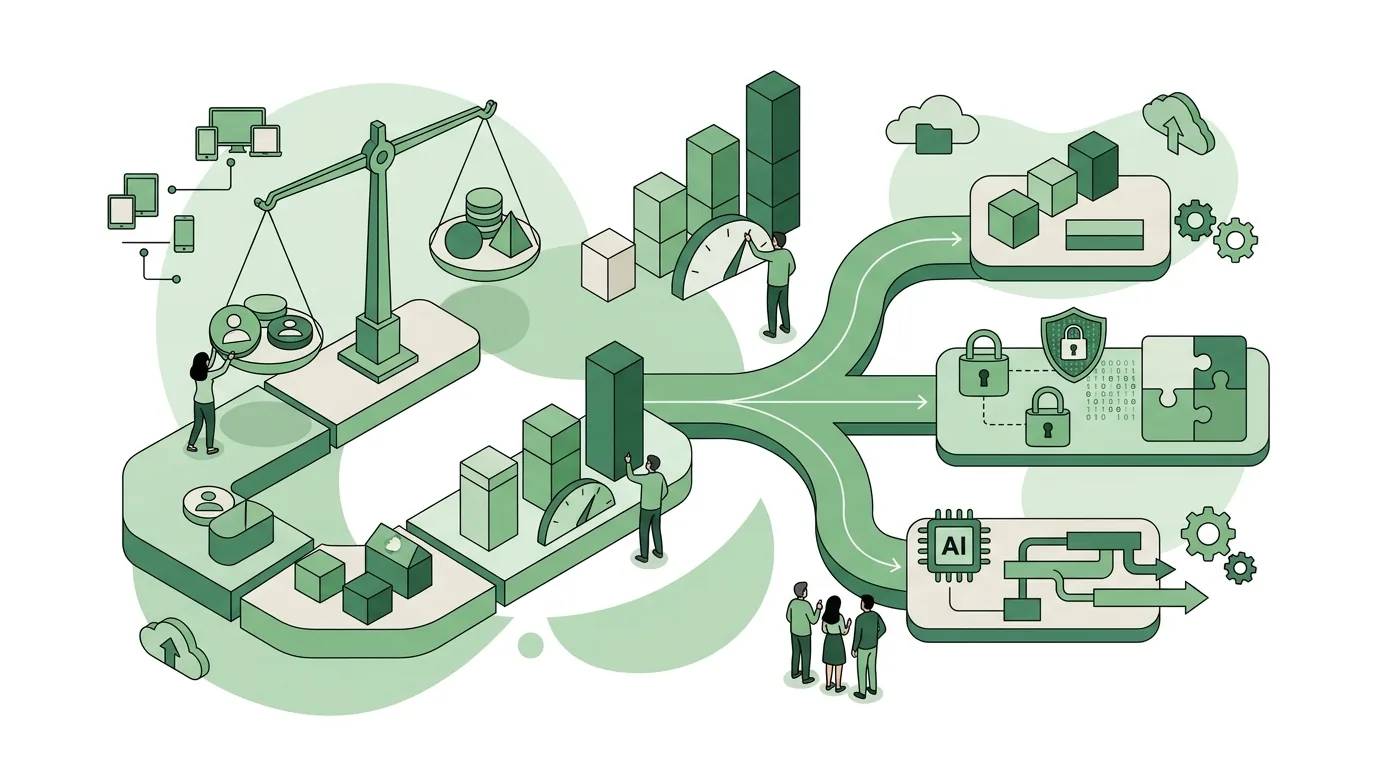
Is there a free ChatGPT Business plan?
There's no permanently free Business plan. Business requires a workspace with at least two paid seats. The only free option is the personal ChatGPT account, which OpenAI calls the Free plan. It's tied to one person, has no admin and no company contract, and whether inputs are used for training depends on each user's own setting. For a business, that's not a substitute, it's a risk: you don't know who is typing which customer data into which account, and when an employee leaves, their chats stay on their personal account.
OpenAI sometimes offers trials or introductory deals for Business. Whether one is available, and for how long, depends on timing and your account, and you'll see it at checkout. If you run a trial, use real but non-sensitive tasks and decide up front how you'll measure the result. Otherwise the trial ends with an impression instead of a decision.
ChatGPT Business and GDPR: What do you have to sort out yourself?
OpenAI offers a data processing agreement for Business and doesn't use company data for training by default. Those are prerequisites, but they don't answer whether your particular use holds up under data protection law. That depends on how you use the tool. The GDPR (General Data Protection Regulation) gives you these tasks, among others:
- Sign the data processing agreement with OpenAI and file it before anyone enters personal data.
- Define a legal basis for each purpose, for example summarizing customer emails.
- Add the processing to your record of processing activities.
- Review the transfer to a third country, since OpenAI is a US company. Your data protection officer determines which legal basis applies.
- Update privacy notices for customers or applicants if their data is processed.
- Write an internal policy on which data may go into ChatGPT and which may not, such as health data or personnel files.
- Check whether a data protection impact assessment is required, especially when processing large amounts of personal data or sensitive data.
What goes wrong again and again: the policy exists, but nobody knows about it. Or employees keep using their personal accounts on the side because that's where they're used to working. A Business workspace doesn't change that unless personal accounts are explicitly ruled out for company data. This list isn't legal advice. The assessment is up to your data protection officer.
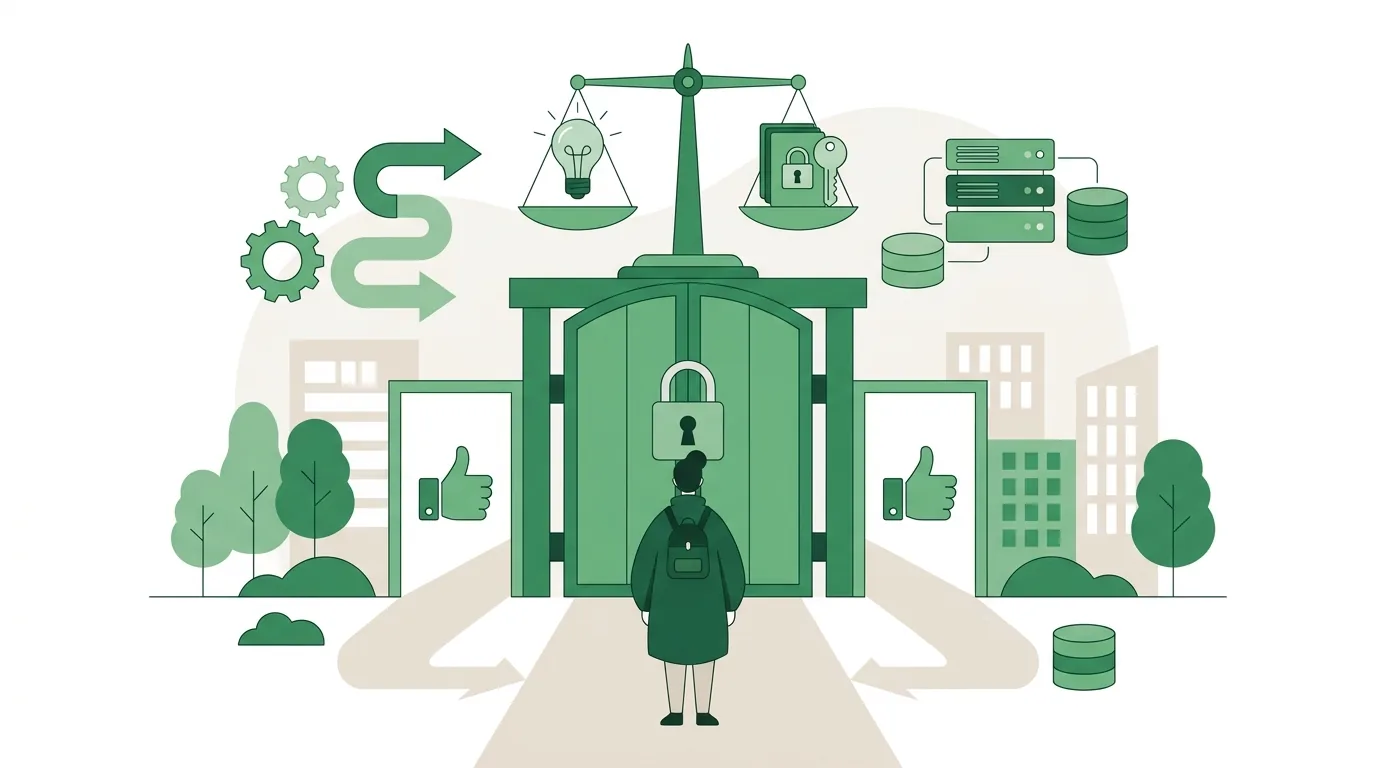
What does the EU AI Act require when you use ChatGPT?
If your company uses ChatGPT Business, you're a deployer of an AI system under the EU AI Act. Under Article 4, in its current version as amended by an amending regulation, deployers take measures to support AI literacy among their staff and other people who work with AI systems on their behalf. They don't have to guarantee a specific level of literacy for every person. In practice, that means documenting onboarding, explaining the tool's limits, for instance that answers can be wrong and need checking, and making sure people know the internal usage policy. Stricter obligations apply to systems listed in Annex III, such as AI used in hiring. Their high-risk rules apply from December 2, 2027. If you want ChatGPT to pre-screen job applications, for example, have that reviewed first. DigifyNow offers training for employees on their own tasks through our AI coaching.
When isn't ChatGPT Business enough?
ChatGPT Business is a tool people chat with. It gets harder once something needs to run without a person, or needs structured data from your systems. Typical limits:
- Automated workflows: A chat doesn't start on its own when an order or email comes in. For that you need the API and an automation that calls the model.
- Wrong answers: The model can make up facts when it doesn't know the answer. For prices, deadlines or contract terms, a person has to double-check.
- Company data: ChatGPT only knows your ERP or CRM if there's an integration. Many industry-specific systems don't have a ready-made one.
- Knowledge stuck in chats: What an employee works out in a chat isn't maintained company knowledge. Unless it's stored somewhere outside the chat, it gets lost or goes stale.
- Occasional users: Someone who rarely needs the tool still costs a full seat. Shared logins aren't the answer, because they break traceability and two-factor sign-in.
Some systems can be connected through connectors, as described in our guide to setting up the Meta Ads MCP in Claude and ChatGPT. If you want inquiries answered automatically or data from your systems processed, a custom AI assistant connected to your systems is often a better fit than buying more seats.
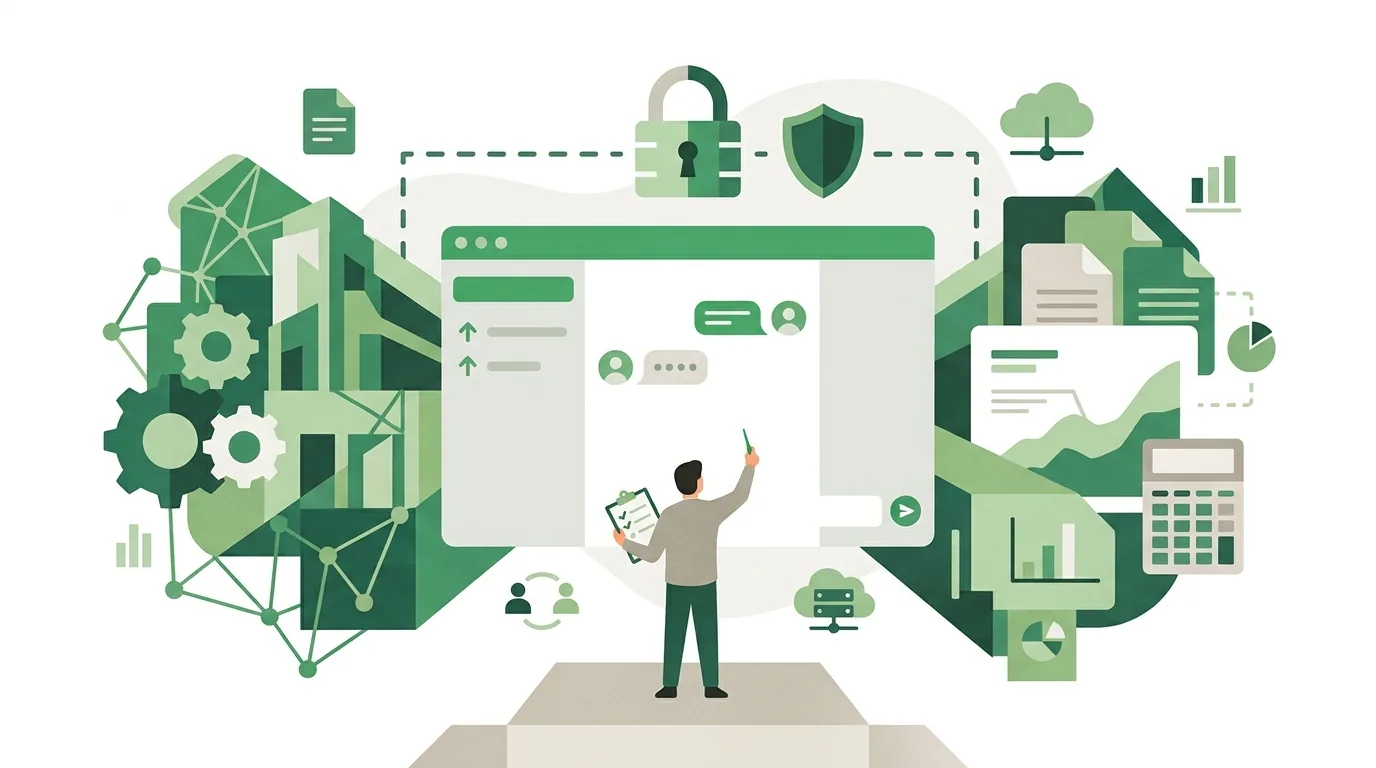
How to roll out ChatGPT Business: Steps
- Pick two or three specific tasks, such as drafting quotes or writing meeting notes. Don't start with "everything it can do."
- Choose a pilot group and buy seats only for them.
- Write the data policy and file the data processing agreement before anyone enters real data.
- Review admin settings: who can use extensions and integrations, and who can share content.
- Train the pilot group and document the onboarding.
- Review after a few weeks: Which tasks worked well, and which seats barely get used? Then expand or scale back.
The organizational side, meaning roles, rules and buy-in, is covered in more detail in our article on rolling out an AI assistant in your company.
When outside help is worth it
For a small team using ChatGPT for writing and research, the Business plan, a clear data policy and some onboarding are enough. Outside help pays off when ChatGPT needs to connect to your systems, when workflows should run automatically, or when many employees with different levels of experience need training. Have this ready: the tasks you want to hand off, the systems involved, the number of users and your existing data protection rules. In a free, no-obligation assessment of your project, we'll work out with you whether a plan is enough or whether you need an integration.
Frequently asked questions
Who is behind OpenAI?
OpenAI is a US company based in San Francisco that develops ChatGPT and the GPT models. For companies in Germany and the EU, the location is what matters most: because OpenAI is based in the US, a data protection review covers not only the data processing agreement but also the legal basis for transferring data to a third country. Your data protection officer sorts that out.
What is the best AI chatbot right now?
There's no single best chatbot for every task. ChatGPT, Claude, Gemini and Microsoft Copilot differ in writing quality, handling of long documents, integrations and plan terms, and the models change often. The only reliable answer comes from a test with a handful of your own tasks, solved by each tool under the same conditions and rated by the same person.
What's the difference between ChatGPT Business and ChatGPT Plus?
Plus is a subscription for one person who manages their own account. Business is a workspace for two or more users that an admin manages centrally. There, OpenAI doesn't use the data for training by default and offers a data processing agreement. With Plus, training depends on the user's setting, and there's no company contract or central control.
Do I need ChatGPT Enterprise instead of Business?
Business covers teams with standard administration. Enterprise is a custom contract with OpenAI for larger organizations. According to OpenAI's ChatGPT Enterprise announcement, customers there keep ownership and control of their business data. Enterprise becomes relevant when contract terms, admin features or user numbers go beyond the Business plan. For most small teams, Business is enough.