Direct Mail: Delivery Options, Costs, Examples
· DigifyNow
Direct mail is a personally addressed promotional letter sent to selected recipients. You pick records from an address file, then print, insert and mail them. A response device such as a code or QR link lets you measure who responds. A printer with lettershop services covers one-off campaigns. For ongoing letters that an event triggers, use a print-and-mail service with an API. Postage, format, volume and data prep drive the cost. Before every send, a suppression list removes anyone who has opted out.
What is direct mail?
Direct mail, often called a direct mailing, is a promotional letter addressed by name to a selected target group. It starts with an address file, which comes either from your own customer base or is rented from a list provider. The German business encyclopedia Gabler Wirtschaftslexikon defines it the same way in its entry "Direct Mailing": promotional outreach to a specific target group based on an address file. Unaddressed mail is something else. It goes to every household in an area and doesn't address anyone by name.
A classic direct mail piece has four parts: an envelope people want to open, a personal cover letter, an insert such as a brochure, flyer or sample, and a response device. The response device can be a reply card, a coupon code or a QR code that leads to a dedicated landing page. Without it, you can't tell afterwards who responded, which is why we consider it the most important of the four parts. Self-mailers and postcards skip the envelope. They're cheaper to produce, but you get less space and no room for an insert.
Measuring direct mail takes two steps. First, each recipient or group gets its own code, so you can match an order or a booked appointment to the letter. Second, you hold back a randomly drawn control group that gets no letter. Only the comparison with this group shows whether people responded because of the letter or would have ordered anyway.
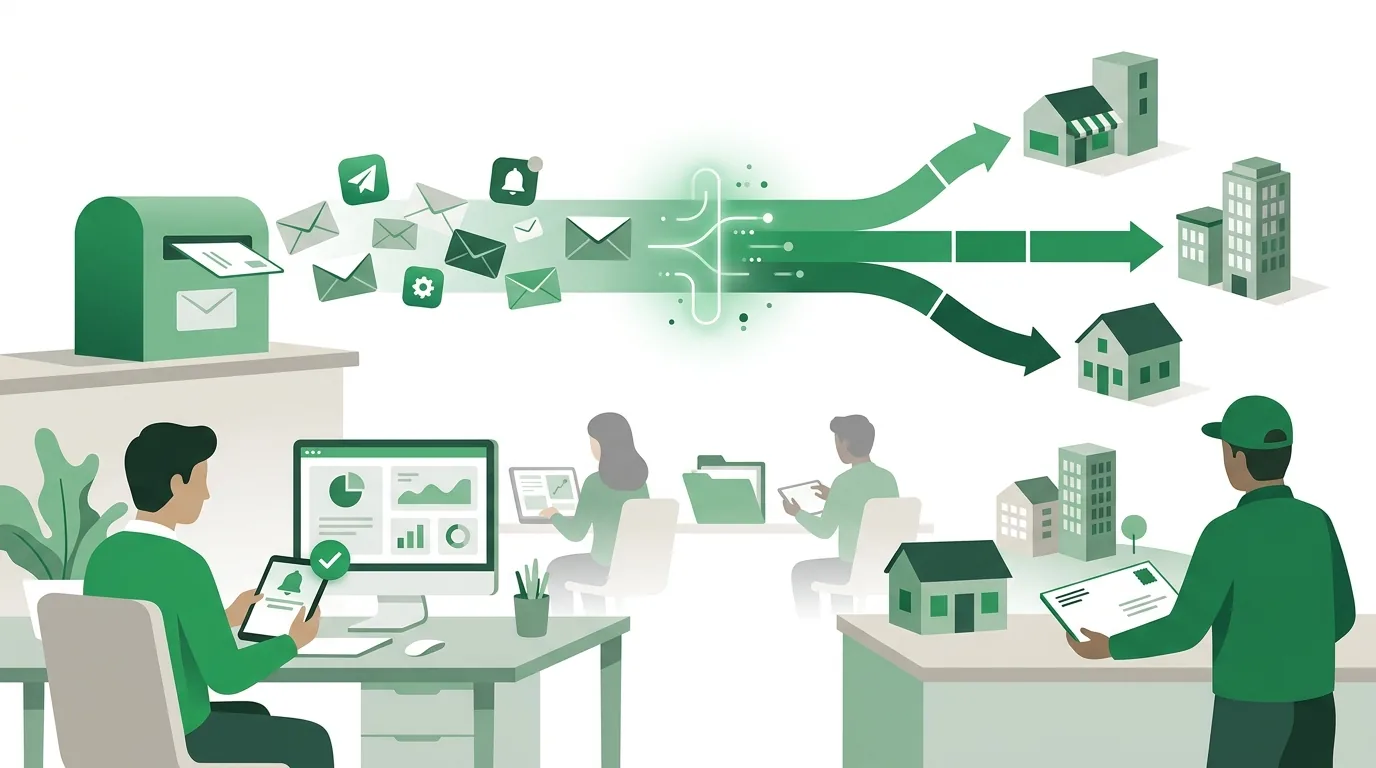
Direct mail examples: which occasions work?
A letter works best when there's a clear reason to send it and the recipient already knows your company. Typical direct mail examples for small and midsize businesses:
- Win-back: a letter to customers who haven't ordered in a set period, with a personal code that only works for that recipient.
- Service and appointment reminders: heating contractors, auto repair shops or hearing aid providers write to customers whose next inspection is coming up. A date in the system triggers the letter, not a campaign calendar.
- Welcome letter: after the first order or a signed contract, customers get a letter with a named contact and information you would otherwise have to explain one by one on the phone.
- A catalog or seasonal offer to existing customers, selected by what they've bought before.
- B2B follow-up letter after a trade show to the contacts who left their business card at your booth.
- New opening or relocation: a postcard to customers in your service area, selected by ZIP code.
- Anniversary or birthday letter with a coupon, provided the date of birth was lawfully collected.
Cold mailings to rented addresses with no particular occasion rarely perform well. They aren't prohibited, but the targeting is rough and the offer often misses. On top of that, you pay for the list rental.
A service reminder shows how event-triggered direct mail works under the hood. Say a heating contractor keeps a "next service date" field in the customer database. The workflow then looks like this:
- Trigger: a daily check finds every customer whose service date falls within the configured lead time.
- Suppression check: records with an advertising opt-out or a suppression flag are removed before any letter is created.
- Address check: if the street, ZIP code or name is missing, the record goes to a review list instead of to print.
- Document: a template generates one PDF per customer with the salutation, an enclosure and a personal booking code.
- Handoff: the PDF goes to the print-and-mail service. Its status is logged in the customer database so nobody gets the same letter twice.
- Response: when a customer books an appointment with their code, the booking is attributed to the letter.
What are the delivery options for direct mail?
The right delivery option depends on three questions. How large is the volume? Does the letter go out once to many people, or continuously to individuals? And how much manual work do you want to keep in-house? For larger volumes of promotional mail in Germany, Deutsche Post offers a dedicated product called Dialogpost. Minimum quantities, content requirements and presorting rules are in Deutsche Post's terms and should be checked before you plan.
| Delivery option | Best for | Personalization | Internal effort | Where it stops working |
|---|---|---|---|---|
| Print, insert and stamp in-house | Small volumes, one-off campaigns | Mail merge from a word processor | High: printing, folding, inserting and stamping by hand | At larger volumes it ties up staff; discounts for promotional mail often require presorting |
| Printer with lettershop services | High-volume campaigns, inserts, special formats | Variable data in digital printing | Low: supply the address file and print files | Lead time for every campaign; not suited to single letters for changing occasions |
| Online print-and-mail service with upload | Medium volumes, recurring campaigns | One PDF per recipient or mail merge | Medium: upload the file, approve | Every campaign is started manually; nothing is triggered from your own system |
| Print-and-mail service via API | Ongoing, event-triggered individual letters | Fully driven by system data | High once for the integration, low afterwards | Only pays off once there are regular occasions; inserts and special formats are usually limited |
With the fourth option, an event triggers the send, for example a service date coming due or a new order. The system then generates a PDF and hands it off to the mailing service. You can build that connection with a workflow tool such as n8n or Make, or code it directly. DigifyNow is a Make partner and earns a commission through a referral code. How triggers, webhooks and retries on errors work in general is covered in our article on business process automation for small businesses.
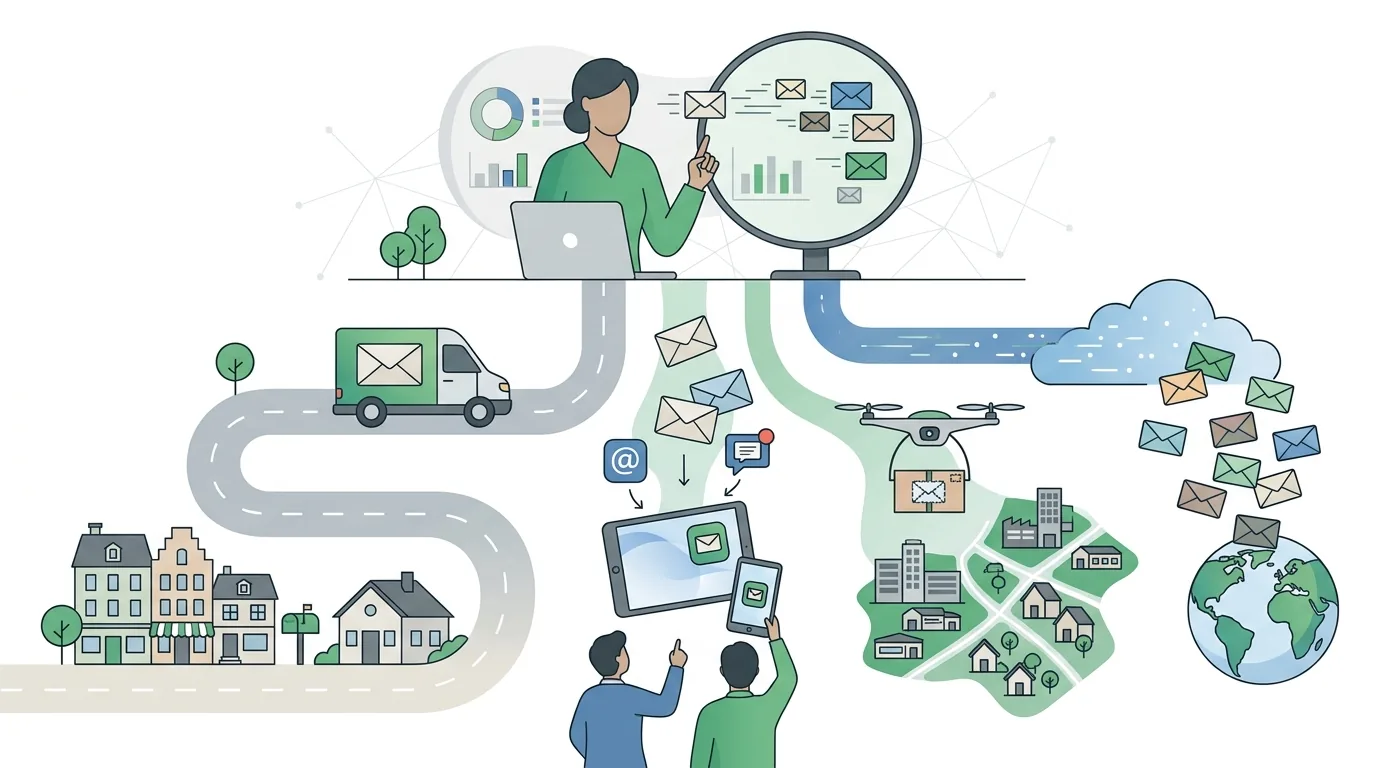
How much does direct mail cost?
You only get a reliable per-piece price once format, volume and delivery option are fixed. The cost is made up of these items:
- Postage: it depends on format, weight and product type. A standard letter and a promotional mailing sent as Dialogpost are priced differently. A single extra insert can push a piece into the next weight tier.
- Printing: format, page count, color and paper. Variable data in digital printing costs more per piece than uniform offset printing.
- Lettershop: folding, inserting, adding enclosures and presorting for the postal service.
- Addresses: your own customer data only costs preparation time. Rented lists are usually billed per use.
- Data preparation: removing duplicates (the same person as "Max Müller" and "M. Mueller"), filling empty salutation fields with a fallback rule, checking addresses and matching opt-outs. This is the item people underestimate most often.
- Character encoding: if a CSV file is saved in an older Windows encoding but the printer reads it as Unicode, umlauts and other special characters turn into garbled strings. A proof print with real records catches this before the full run starts.
- Returned mail: undeliverable letters cost printing and postage without anyone reading them. The usual cause is a database that hasn't been cleaned up in years.
- Integration: sending via API adds a one-time development cost, followed by operation and maintenance.
Binding numbers come from quotes by a printer or mailing service, calculated for a specific volume, format and weight. Current postage terms are in Deutsche Post's price lists.
Which addresses can you use for direct mail?
In its recitals, the GDPR explicitly names direct marketing as a case where processing personal data may be based on legitimate interest. That doesn't replace the balancing test this legal basis requires, weighing the advertiser's interest against the recipient's. The GDPR also gives every person a specific right to object to direct marketing: they can object at any time, and after that their data may no longer be processed for that purpose. People must be informed of this right no later than the first communication, clearly and separately from any other information. If the addresses don't come from the individuals themselves, for example with rented lists, separate information obligations apply. Germany's Act Against Unfair Competition (UWG) also prohibits advertising where it's evident the recipient doesn't want it, such as a no-advertising sticker on the mailbox.
In practice, this means an opt-out isn't deleted but stored as a suppression flag. Otherwise the same person reappears with the next import. This suppression list has to run against the address file before every send, rented addresses included. Whether a specific mailing is permitted depends on where the data came from, how the people concerned were informed and the balancing test. Those questions are for your data protection officer or legal counsel, not the mailing service. How to maintain suppression flags properly in your customer database is covered in our article What is CRM.
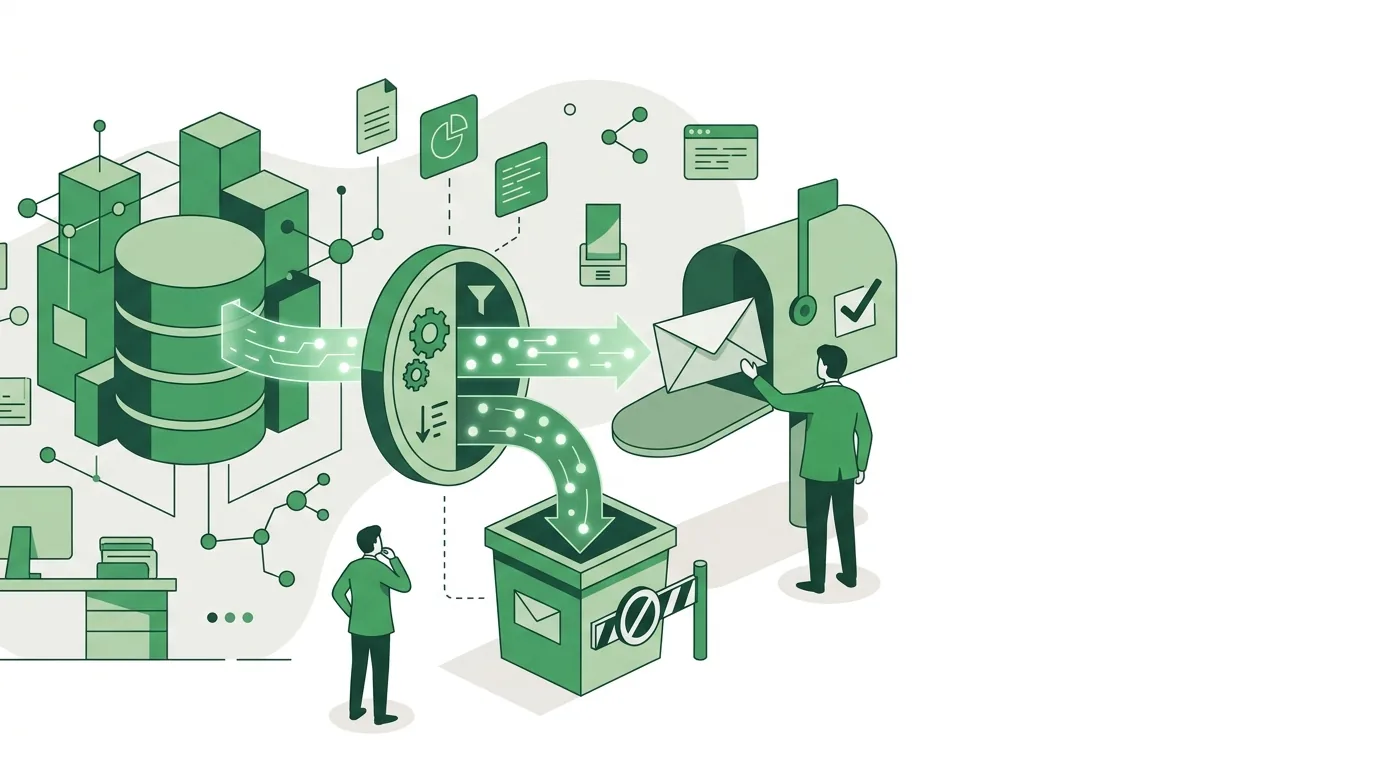
LetterFlow: automated letter mailing
LetterFlow is a product by DigifyNow for automated letter mailing. It's built for companies that don't send letters as a single campaign but regularly, straight from their own data. Think reminders, welcome letters or win-back letters, where someone in the office would otherwise have to export data, create mail merges and start the send by hand. Whether it's worth it depends on how often such occasions come up and where your data lives. For a single holiday campaign once a year, it isn't. How DigifyNow plans direct mail, email and customer outreach together is described on our page on direct marketing.
When outside help makes sense
For a one-off campaign using your own address list, a printer with lettershop services is usually enough. Outside help makes sense when letters should be triggered automatically from your CRM, online store or ERP system, when data comes together from several systems, or when suppression lists have so far been kept separately. For a first conversation, have the following ready: where your address data lives, which occasions should trigger a letter, roughly how often that happens and who signs off internally. Through our contact page you can request a free, no-obligation assessment of your project. For an overview of everything we do, see our services.

Frequently asked questions
What is direct marketing?
Direct marketing is advertising that targets individual recipients personally and aims to trigger a measurable response. It includes addressed promotional letters, email newsletters, telemarketing and loyalty cards. Traditional advertising in newspapers or on billboards, by contrast, reaches an undefined audience. With it, you can hardly tell who responded.
What is a mailing?
A mailing is a promotional or informational piece sent at the same time to many selected recipients. In German usage, the term covers both the postal letter, meaning the print mailing, and the email send. Direct mail is the addressed print mailing made up of envelope, cover letter, insert and response device.
What goes into a direct mail piece?
A direct mail piece has four parts: envelope, personal cover letter, insert and response device. The response device is a reply card, a personal coupon code or a QR code to a dedicated landing page. Without it, you can't attribute any order to the letter. Postcards and self-mailers skip the envelope, and in return have no room for inserts.
When do I have to tell recipients about their right to object to direct mail?
The GDPR requires this notice no later than the first communication with the person, clearly and separately from any other information. In direct mail, that's usually the first promotional letter itself. An incoming opt-out is stored as a suppression flag rather than deleted, so the address isn't used for advertising again after the next import.
Can you send direct mail to purchased or rented addresses?
Sending direct mail to rented addresses is generally possible. The GDPR accepts direct marketing as a legitimate interest but requires a balancing test against the recipient's interests. Anyone who has objected to their data being used for advertising may no longer be contacted. The suppression list therefore has to run against rented addresses too. Your data protection officer settles the individual case.