How to Sell an App Idea: Options and Limits
· DigifyNow
A bare app idea rarely sells. It has almost no legal protection and takes none of the risk off a buyer. What buyers pay for is evidence: conversations with prospects willing to pay, a clickable prototype, an MVP with first users, or a finished app with code, store account and user base. If you want to sell, validate the problem first, build the smallest testable version, then approach companies that have exactly that problem.
Can you sell an app idea?
You can, but rarely as a bare idea. A buyer doesn't pay for the idea itself. They pay for carrying less risk. An idea on a single sheet of paper leaves open the questions its value depends on: Does a specific group of people actually have this problem? Will they pay for a solution? Can the app be built and run at a reasonable cost? As long as nobody can answer those questions, all of the risk sits with the buyer, and to them the idea is worth very little. That's not a put-down. It's simply how buyers do the math.
On top of that, ideas are rarely exclusive. If you've spotted an obvious problem, chances are you're not the only one. That's why many larger companies won't accept unsolicited idea submissions at all. Others make you sign a statement first saying the submission gives you no claim against them. That way they avoid disputes if they're already working on something similar internally. What actually counts on the other side of the table is evidence: Who would use this, how do they solve the problem today, and what does that current solution cost them?
Can you patent or protect an app idea?
In Germany, an idea as such isn't protected by copyright or by any other intellectual property right. Copyright only kicks in once the idea takes concrete form: source code, text or graphics. Software can only be patented in narrow cases, namely when it solves a technical problem by technical means. A business idea like "an app that connects tradespeople with customers" almost never meets that bar. Whether anything in your case can be protected is a question only a patent attorney can answer.
- Non-disclosure agreement (NDA): binds only the party that signs it. Investors and larger companies often refuse to sign one before they'll even listen to your pitch.
- Trademark: protects the name and logo, not the functionality. It's worth filing once you know what name the app will launch under.
- Proof of authorship: a dated concept, drafts and code in a version control system show who created what and when. That helps in disputes over code and design, not over the idea.
- Head start: the most effective protection in practice is having users and data before anyone else does. You only get that by building the thing.
What are the ways to monetize an app idea?
There are four realistic paths. They differ in how much you have to deliver up front and in what a buyer or partner actually ends up with. The further along your project is, the more risk has already been taken off the table, and the more likely you are to get a serious conversation.
| Path | What you deliver | What the other side gets | Where it fails |
|---|---|---|---|
| Sell the bare idea to a company | A description, maybe a slide deck | A suggestion with no intellectual property behind it | Companies don't accept submissions, or they're building something similar anyway |
| Offer or license a concept with a clickable prototype | Evidence of the problem from interviews, a clickable prototype, a rough effort estimate | A validated approach they can build themselves | There's no proof anyone will pay, and a license on a concept is hard to enforce |
| Build an MVP and look for a partner or investor | A working core feature, first users, usage metrics | A product that can be measured | The MVP is scoped too big and the money runs out before the first users arrive |
| Sell a finished app | Code, store listings, backend, user base, documentation | An operation they can take over | The store account or servers are registered to a contractor, and the handover stalls |
A special case is going straight to a company that has the problem itself. A wholesaler whose field sales reps take orders over the phone won't buy an idea. But they may well buy a solution that maps exactly that process. At that point, selling an idea turns into a client project or a licensing model, and that's often the most realistic route.
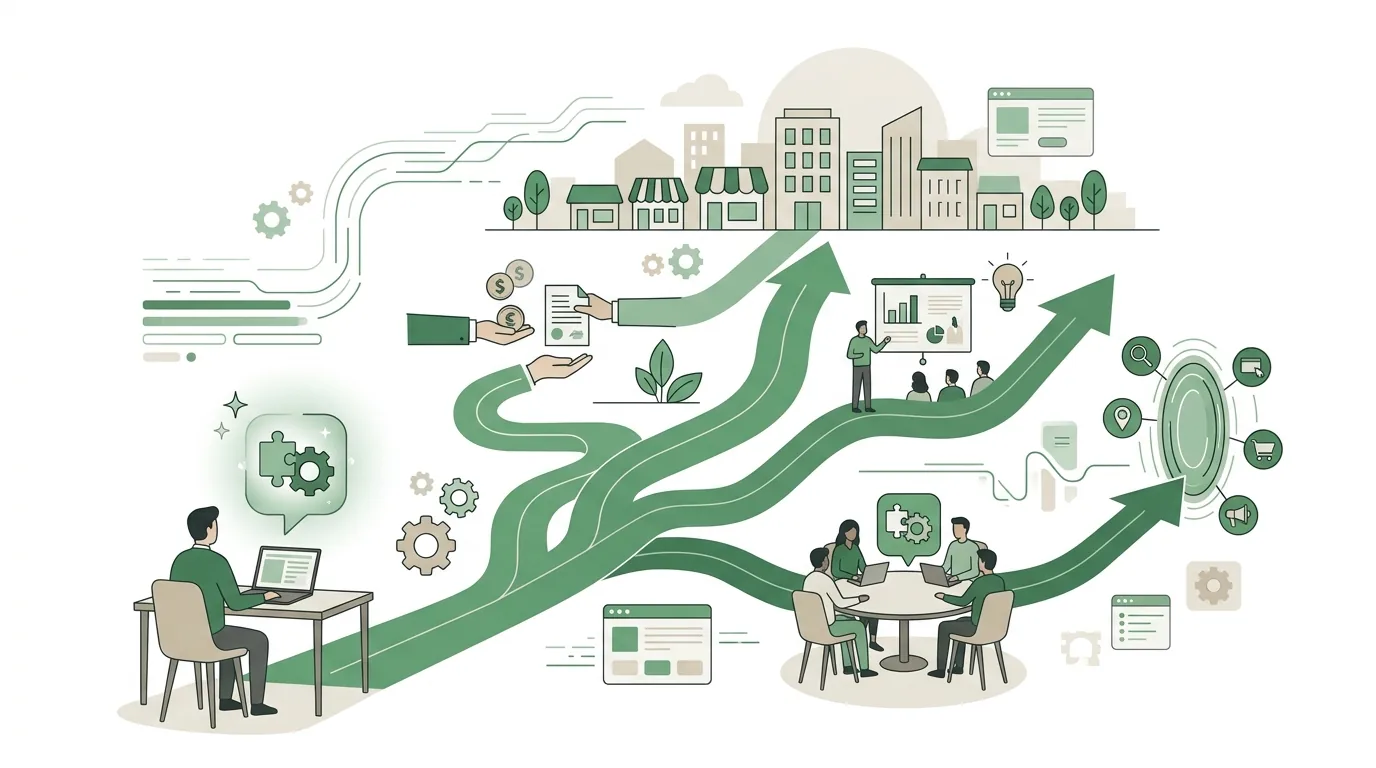
I have an app idea. What should I do now?
- Write down the problem and the user in one sentence: who, what problem, and how it gets solved today. If you can't say it in one sentence, you don't have a sellable idea yet.
- Talk to potential users, and talk about their day-to-day work, not about your app. Ask what their current solution costs them and when it last frustrated them.
- Look for existing solutions: in the app stores, as web-based software and as Excel templates. If there aren't any, that can also mean nobody is willing to pay for one.
- Define the smallest testable scope: one core feature, one type of user, one platform. Everything else goes on a list for later.
- Build a clickable prototype and show it to five to ten people you've interviewed. Watch where they get stuck instead of asking whether they like it.
- Only then decide on development, a partner or a sale. Before signing the first contract, settle whose name the store account, domain and source code will be registered to.
What a small first version looks like in terms of timeline and scope is covered in our post on having an MVP built: cost and timeline. If you already know you're going to build, you'll find the full process in the article How to develop an app: process, platform and choosing a partner.
How much does it cost to bring an app to market?
You only get a credible number once the scope is pinned down. Ballpark figures from the internet don't help much, because two apps that sound alike can involve completely different amounts of work. The price comes from these line items:
- Scope: the number of screens, user roles and edge cases. One role with one core feature is a very different job from an app for customers, employees and back-office staff.
- Platform: web app, iOS, Android, or all of them. Cross-platform technology saves duplicate work, but it doesn't solve every device requirement.
- Integrations: payments, calendars, inventory or ERP systems, sign-in with existing accounts. Every integration needs testing and breaks when the other side changes something.
- Data: if existing data has to be migrated, cleaning it up often costs more than expected.
- Operations: servers, updates for new operating system versions, bug fixes and store maintenance come back every year, not just once.
A reliable figure comes from estimating the effort feature by feature, based on a written scope. What drives each line item is explained in detail in the article App development cost: what drives the price.
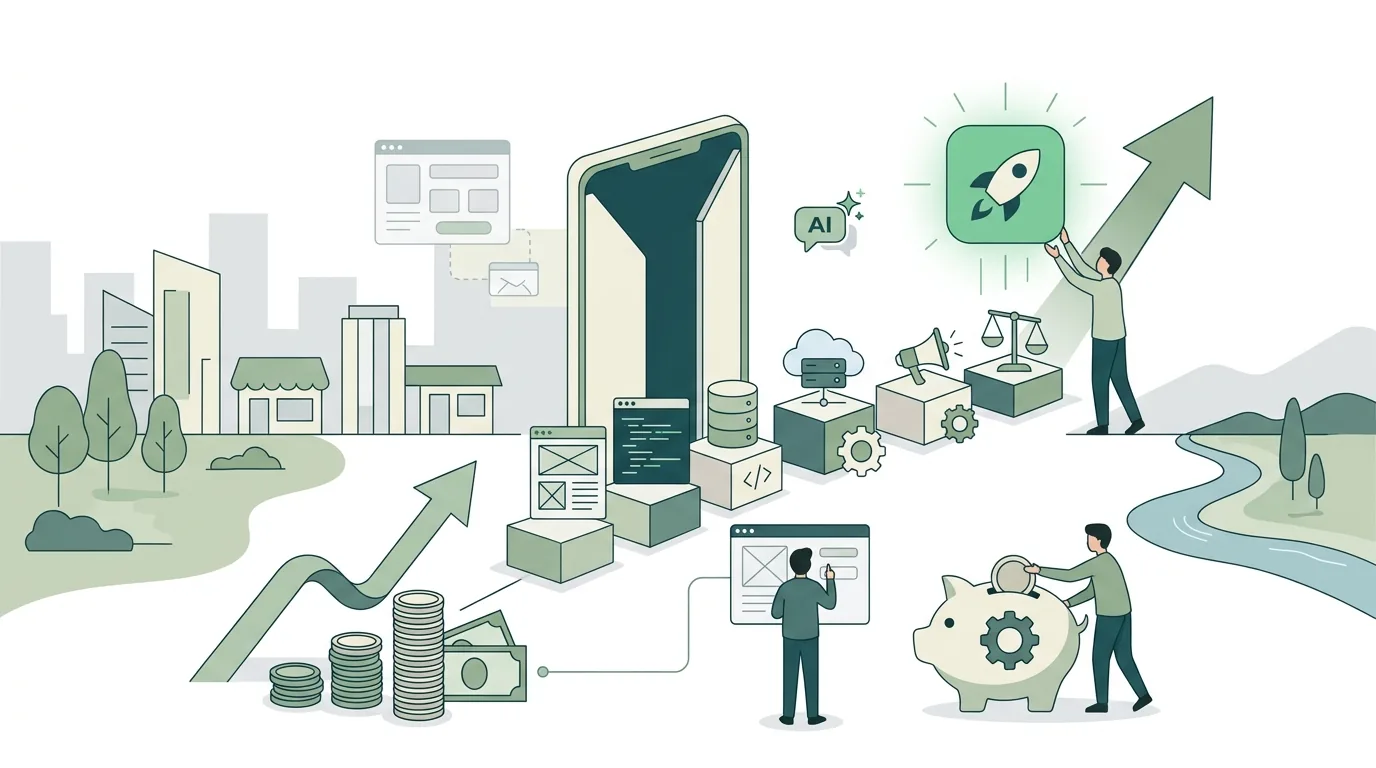
How much money can you make with your own app?
There's no typical number. Earnings depend on the revenue model, the target audience and distribution, not on the app itself. A business app with a per-user subscription can be sustainable with just a few paying customers. A free consumer app funded by ads, on the other hand, needs a very large number of active users. For digital content and features sold inside the app, Apple and Google require their own payment systems in many cases and keep a commission. You need to have that sorted out before you set your prices. If you publish an app without a plan for acquiring users, it usually gets found by hardly anyone in the stores. Which models exist and where they hit their limits is covered in the article Make money with an app: models and limits.
What gets handed over when you sell a finished app?
When you sell a finished app, you're selling an operation, not just code. Apple and Google both provide a way to transfer an app between two developer accounts. For that, both sides need their own account, and the app has to meet the terms of the respective store. The handover includes:
- Source code with its complete version history and instructions for building the app
- Store listings along with the signing keys, because without the right key you can't publish updates
- Backend, database and server access, plus the contracts with the hosting provider
- Domain, email addresses and accounts with services such as push notifications or payments
- User data, whose transfer has to be reviewed separately under data protection law
The most common stumbling block: the store account or servers are registered in the developers' name rather than the owner's. Then the handover depends on their cooperation. How to settle this when you pick a developer in the first place is covered in the post How to find an app developer: options, criteria, mistakes.
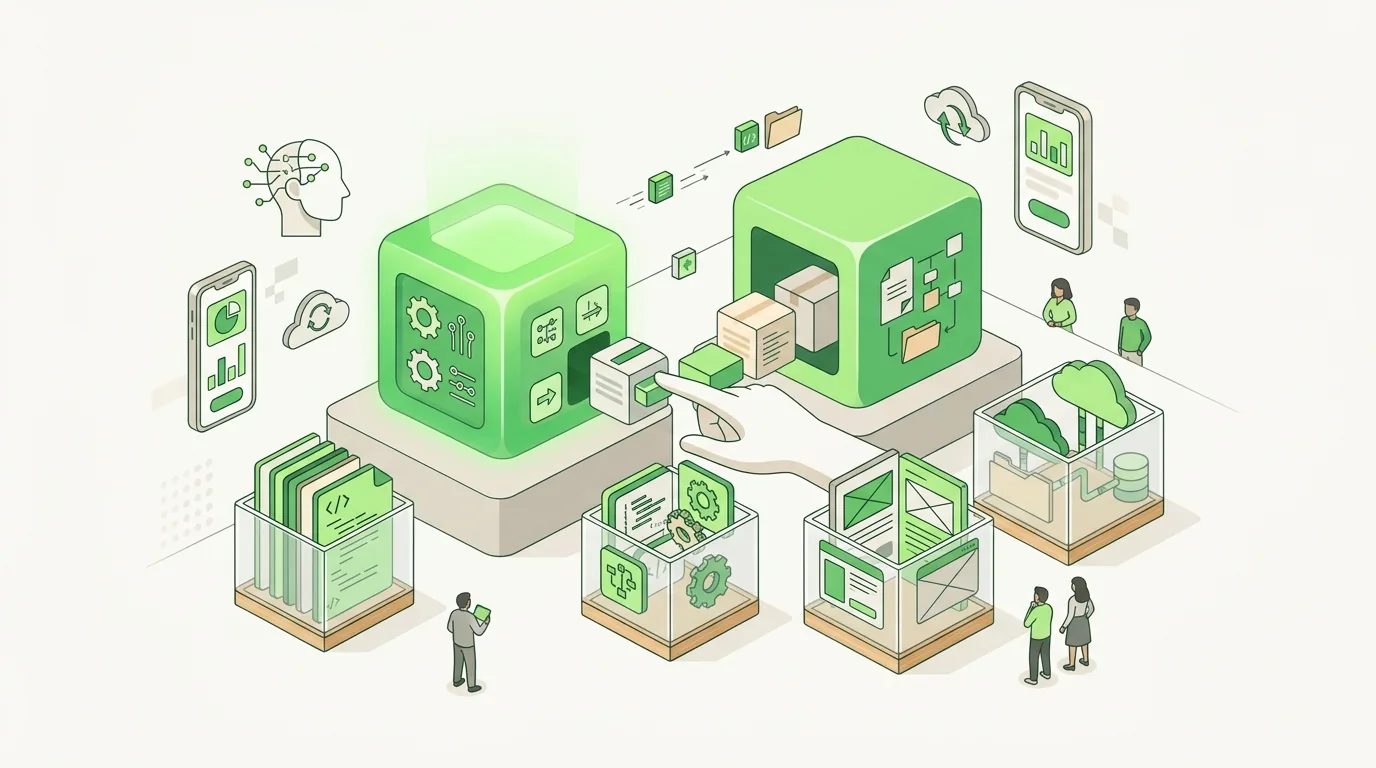
App development in the Westerwald: who builds your idea?
If you want to have an app idea built by someone in the region, you'll usually search for one of the terms below. Here's what each one means and what to look out for.
- App development in the Westerwald: building an app from concept through design and programming to launch, with contacts close by. Being local mostly helps with scoping workshops and with testing alongside real users on site.
- App developers in the Westerwald: this can be a single developer or a team. What matters isn't the zip code but whether they can show published apps and whether the contract makes you the owner of the source code and the store account.
- App development agency in the Westerwald: an agency covers concept, design, development and operations, and can cover for one person's vacation or sick days. Ask who will handle updates for new iOS and Android versions after launch.
- Web app development in the Westerwald: a web app runs in the browser, needs no store review and works on any device. For a first testable version of an app idea it's often the faster route, but it hits limits with device features such as background location tracking.
- Mobile app agency in the Westerwald: this means apps for iPhone and Android that are distributed through the stores. Plan for Apple's and Google's review process and for ongoing maintenance of the store listings from day one.
DigifyNow is based in Unnau in the Westerwald region and focuses on the Westerwald, Koblenz and Siegerland, while also working across Germany. How we build apps is described on the page App developers in the Westerwald. Browser-based solutions are covered on the page Web app development in the Westerwald.
How DigifyNow works with app ideas
DigifyNow doesn't buy ideas and doesn't broker buyers. We build apps and web apps for businesses and founders. It starts with a free, no-obligation assessment: we look at whether the idea can be built as a small first version and what drives the effort. We typically deliver an MVP with one core feature in 4 to 8 weeks. For a specific project, a date is only set once the scope has been clarified. The store account and source code should be registered to the client. We know the road into the app stores firsthand through Festino, a product by DigifyNow: a party game app we published ourselves and continue to maintain. We'll also tell you when an app isn't worth it, for example when a spreadsheet or existing software already solves the problem.
When outside help makes sense
Outside help is worth it once your user interviews have shown the problem is real and you now need to know what a first version includes and what drives its cost. Or when you want to take over or hand off an existing app and it's unclear where the code, keys and accounts live. Have your one-sentence problem-and-user statement ready, along with notes from your interviews, a list of the core feature and, if you have them, sketches or a clickable prototype. Use the page for a free assessment of your project to describe your idea, and we'll get back to you with an initial take.
Frequently asked questions
Do big companies buy app ideas?
Rarely. Many larger companies have a policy of not accepting unsolicited idea submissions, or they require you to waive any claims first. That way they avoid disputes if they're already working on something similar internally. You have a better shot pitching a business that has the problem itself, and doing it with a clickable prototype or an MVP rather than just a description.
What is a clickable prototype?
A clickable prototype is a prototype without any program logic: linked screen designs you can click through as if it were a real app. It doesn't store any data. Unlike an MVP, it shows whether users understand the flow, but not whether they'll keep using the app or pay for it.
Does an NDA protect my app idea?
Only to a limited extent. A non-disclosure agreement binds only the party that signs it, and only for the information precisely described in the contract. It does nothing against third parties who have the same idea. Investors often decline to sign one in a first meeting. With developers and contractors, on the other hand, an NDA is standard and makes sense.
Do I need a technical co-founder for my app idea?
Not necessarily. A co-founder who codes is one of three options, alongside hiring a contractor and building it yourself with low-code tools. A co-founder usually gets equity instead of cash. Contractors cost money but let you keep all the equity. Low-code works for simple workflows and hits its limits with device features and custom logic.