Technical Debt: Causes, Costs, Paying It Down
· DigifyNow
Technical debt builds up when software is built with shortcuts, such as no tests, hard-coded integrations or outdated libraries. The shortcut saves time today. The interest is the extra effort every later change costs. To pay it down, rework the affected parts deliberately. Start where code changes often and bugs show up, and put tests in place first. Debt in code nobody ever touches can stay where it is.
What is technical debt?
Technical debt is the extra work you pay for later because a software team picked a quick fix over a clean solution today. The shortcut is the loan. Every later change in that part of the code takes longer, and that's the interest. Cleaning it up properly is paying off the principal. Software developer Ward Cunningham coined the term in 1992 in an experience report for the OOPSLA conference. That's according to the German-language Wikipedia article "Technische Schulden" (accessed November 3, 2026).
For you as a business owner or executive, this means technical debt never shows up on a balance sheet. You only notice it indirectly: a small change suddenly takes weeks, or a software update breaks something in a completely different place. Debt isn't automatically bad. If a team takes on debt on purpose to get to market sooner and writes it down, that can be a sound business decision. It gets expensive when nobody notices the debt, because then nobody plans for it either.

An example: the quick ERP integration
A retailer wants orders from their online store to flow into their inventory and ERP system automatically. It has to happen fast, so a developer writes a script. Credentials, field names and the logic for shipping methods are hard-coded right into it. There are no tests and no logging, and errors get skipped silently. The script works, and at first it saves time.
A year later, a new shipping method is added. Whoever edits the script finds the logic scattered across several places and has no way to check that everything still works afterward. If the ERP system renames a field, orders stop arriving, and because errors are skipped, nobody notices until a customer complains. Every one of those hours is interest. Here's how to pay it down: pull the configuration out of the code, write one test per shipping method, and log errors instead of swallowing them. Our article What Is an API: Definition, Example, Practice explains how to build integrations cleanly.
What are the types of technical debt?
Technical debt doesn't only live in the code. You can tell apart at least the six types below, and each one shows different symptoms. There's also a second question that cuts across all of them. Software author Martin Fowler described it in 2009 in his "Technical Debt Quadrant" post on martinfowler.com: was the debt taken on deliberately or inadvertently, prudently or recklessly? A deliberate shortcut that's written down can be planned for. With an inadvertent one, nobody knows where it is.
| Type | How it builds up | How you notice it |
|---|---|---|
| Code | Copy-pasted logic, unclear names, very long functions | Small changes take unexpectedly long |
| Architecture | Modules reach directly into other modules' data | One change causes bugs in unrelated places |
| Dependencies and infrastructure | Libraries, frameworks or servers aren't kept up to date | Security updates can't be applied without something breaking |
| Testing | Automated tests are missing or get skipped | Someone clicks through everything by hand before each release, and bugs still slip through |
| Documentation and knowledge | Only one person knows how the system works | That person's vacation or departure blocks changes |
| Data | Free-text fields instead of picklists, duplicates, no required fields | Reports contradict each other, migrations become a big job |

What does technical debt cost?
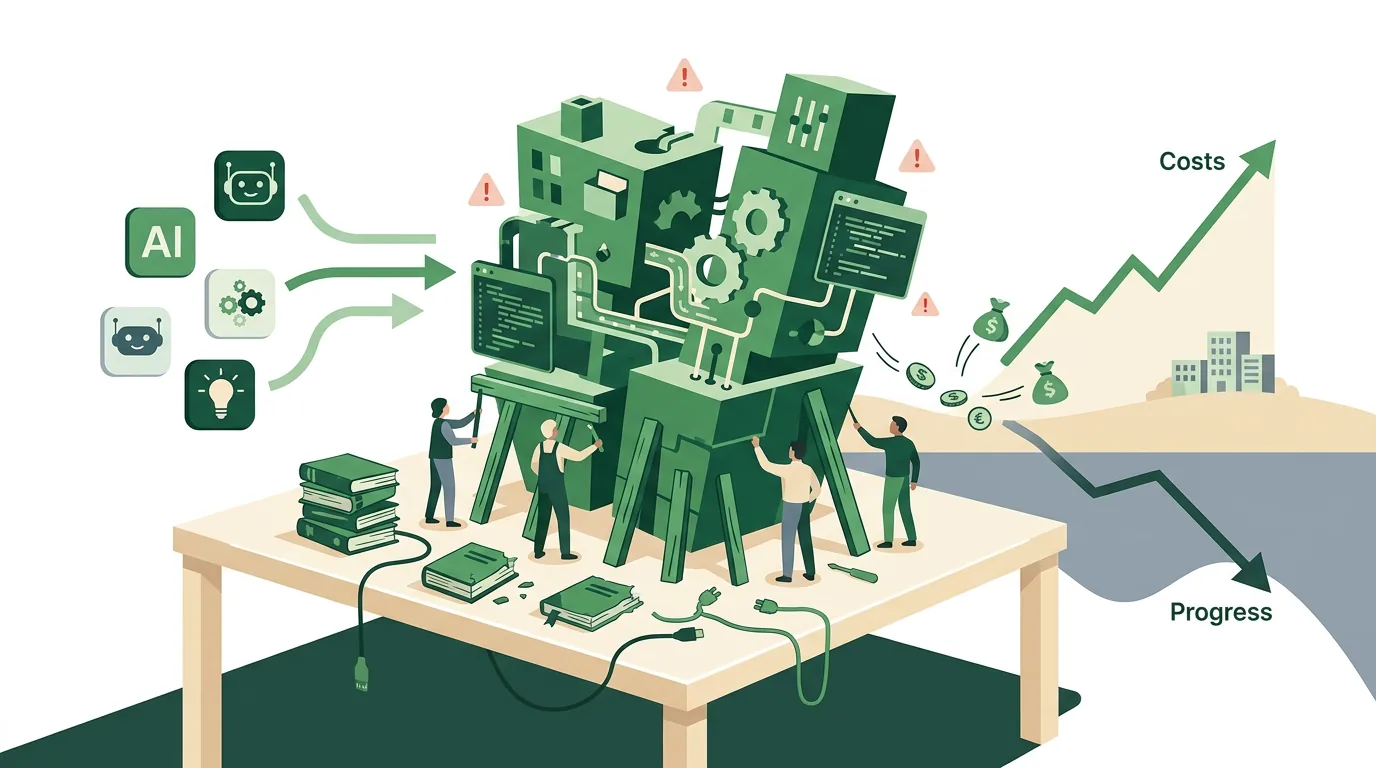
There's no blanket number, because the cost depends on how the debt works, not on how much messy code there is. You only pay interest when someone touches that part of the code. An ugly module that has run untouched for years costs practically nothing. A core feature carrying debt that gets extended every month costs you again with every extension. Four things decide it: how often the affected area changes, how many integrations depend on it, how much data has to move along with a rework, and whether there are tests to make a rework safe.
Then there are costs no timesheet shows: postponed security updates, dependence on individual people, and features that never get built because they seem like too much work. You only get a reliable number once someone looks at the specific spots and estimates the payoff and the ongoing interest separately. Software Development Cost: What Drives It covers what drives development effort in general.
When is paying it down not worth it, and when should you rewrite?
Not every debt has to be paid off. If a system is going to be replaced soon, reworking it would be wasted effort. In that case it's enough to keep it secure and stop adding new features until it's replaced. Shortcuts are also fine in a prototype that's only meant to answer one question, as long as it doesn't quietly turn into the production system afterward. In practice, though, that happens a lot.
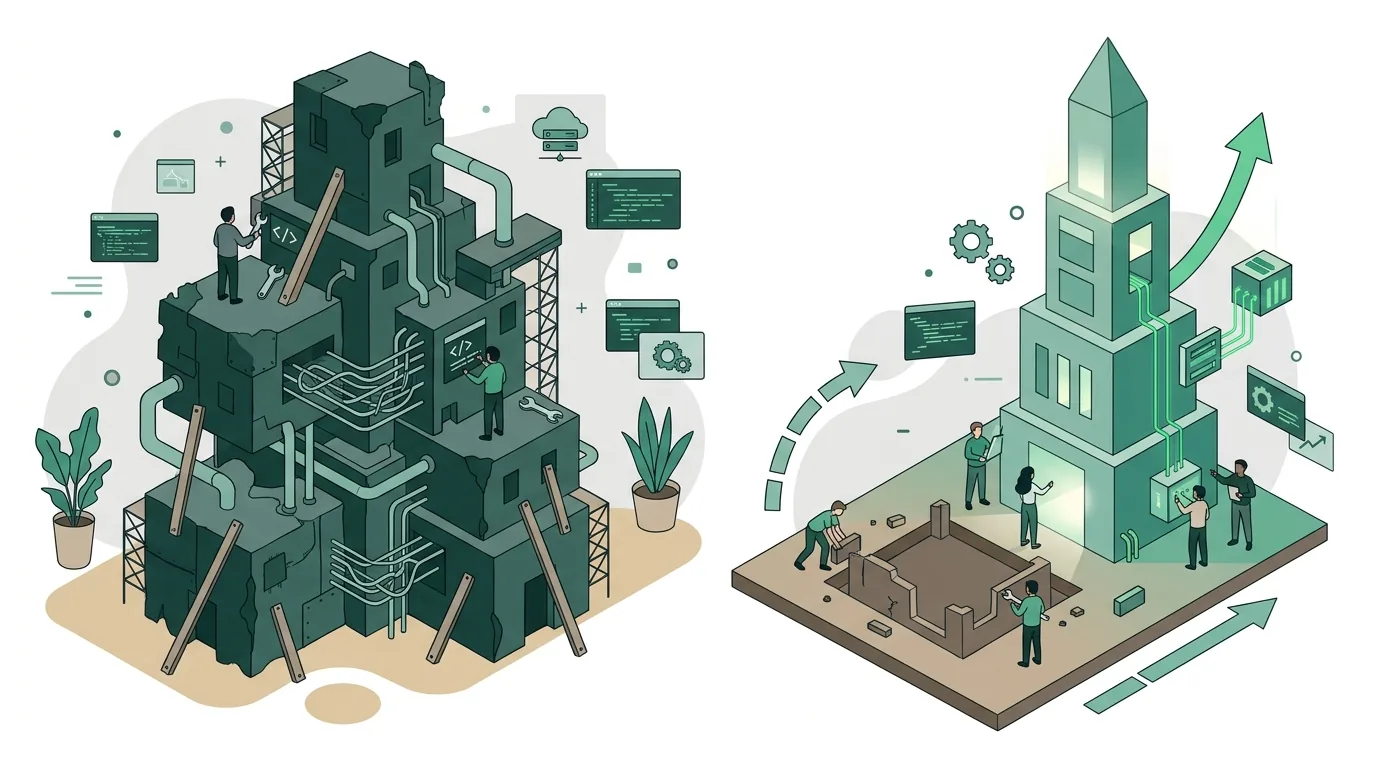
A full rewrite often gets proposed as the way out, and rewrites fail especially often. The old system holds years of knowledge about edge cases that isn't written down anywhere. While the rewrite is underway, the legacy system still has to be maintained, and the two drift apart. A gradual replacement usually makes more sense: rebuild one area at a time, switch it over behind an interface, and let the legacy system shrink piece by piece. A rewrite is more likely to pay off if the platform itself is no longer supported or the data model fundamentally doesn't fit the business. Then you also need a planned data migration.
Technical debt in an MVP: take it on deliberately, keep it visible
An MVP is small and built fast on purpose. It's tempting to drop quality altogether. A distinction helps here. You can cut corners on the UI, convenience features, or automations that can run manually at first. But you shouldn't cut corners on the data model, permissions, or tests for the core feature. Fixing these later is especially expensive, because everything else is built on top of them and real data has to move along with them. The article MVP Development: Cost and Timeline describes how DigifyNow scopes an MVP down to the core feature.
DigifyNow builds custom apps, web apps and software for small and mid-sized businesses and supports them after launch, too. Part of that is naming shortcuts in an MVP openly and planning to pay them down in the next phases of development. For an overview, see DigifyNow's services in software development and AI.
When outside help makes sense
Outside help makes sense when you notice signs like changes taking longer or updates being put off, but nobody in-house can pin down the cause. It also makes sense when the only person who knew the system is no longer around, or when you have to choose between reworking and replacing. Have these ready: access to the source code and hosting, a list of connected systems, the most recent known bugs, and the changes coming up next. Use the contact form for a free assessment of your system to describe the situation. DigifyNow will get back to you with an initial view of which areas need a closer look.

Frequently asked questions
Who coined the term technical debt?
According to the German-language Wikipedia article "Technische Schulden" (accessed November 3, 2026), the term comes from Ward Cunningham. He used it in 1992 in an experience report for the OOPSLA conference to explain to non-technical people why software shipped quickly needs rework later. The picture of a loan with interest and principal has been widely used in software development ever since.
What does "debt" mean in "technical debt"?
Debt is a liability, something you owe and have to pay back. The term "technical debt" borrows that financial meaning as a metaphor. The shortcut is the loan, the extra effort on later changes is the interest, and cleaning it up properly is paying off the principal.
What is actually owed with technical debt?
Debts are obligations you take on today and settle later, usually with interest. With technical debt, the obligation isn't money but work. Every shortcut in the code either has to be reworked later, which is paying off the principal, or it adds extra effort to every change, which is the interest.
What's the difference between deliberate and inadvertent technical debt?
In his 2009 "Technical Debt Quadrant" post, Martin Fowler describes two axes: deliberate or inadvertent, and prudent or reckless. Deliberate debt is a documented shortcut, for example to launch sooner. Inadvertent debt comes from a lack of knowledge and goes unnoticed until changes start taking suspiciously long.
Is technical debt always bad?
No. Debt you take on deliberately and document can make sense, for example to test an MVP sooner. The problem is debt nobody notices and debt in areas that change often, because there you pay interest with every change. In code that's never touched, debt costs practically nothing.